Barbara receives a new wheelchair, with thanks to East Kent Masons

Barbara receives a new wheelchair, with thanks to East Kent Masons

Barbara receives a new powered wheelchair, with thanks to East Kent Freemasons

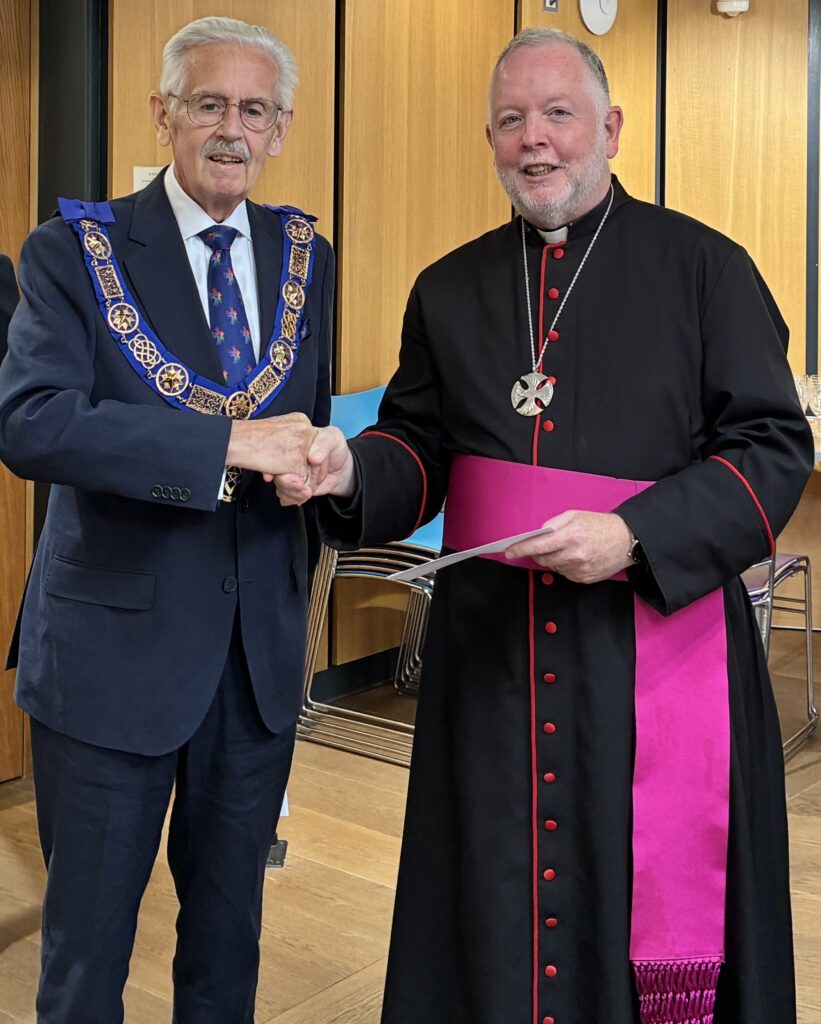
On Sunday 14th June 2026, W.Bro Alex Coppin, representing the Septem Lodge, L7788 based in Dover W.Bro David Bragg, representing the Royal Military Lodge L1449 based in Canterbury, W.Bro Kevin Kemp, Representing the Millennium Lodge L9730 based out of Tovil Maidstone as well as Military Jubilee Chapter C2195 based out of Dover& Bro Chris Eason also of the Septem Lodge L7788 and father of Jerra Eason, met up with Jerra and ‘Barbara’ her newly purchased Powerchair, funded by the successful Match funding application of the three Lodges and Chapter, to the Cornwallis East Kent Freemasons Charity, bringing together the basics of the 3 Pillar Strategy by making a difference to people in our local communities.

Figure 1- Pictured with Jerra & ‘Barbara’ L to R are: 
W.Bro Kevin, W.Bro Alex, Bro Chris & W.Bro David

The story starts with a conversation between Bro Chris and the Septem Lodge Almoner  Alex, about whether Jerra could be helped to purchase a Powerchair to help Jerra be able to get out of her house and get back to her work with the Girl Guide movement amongst other things.

The request was made to the General Purpose Committe (GPC) of Septem and Kevin said, why not look at getting some Lodges together and apply for a Match Funding Grant form our own Charity, the Cornwallis East Kent Freemasons Charity, (CEKFC).
In addition to the Septem Lodge, Kevin approached, Royal Military Lodge in Canterbury, Millennium Lodge of Charity in Tovil (as a member) and  James Wright approached the Military Jubilee Chapter, all four agreeing to support an application.
Application made online very easily,

  1. decision made by the CEKFC Trustees,
  2. cheques collected from the 4 units paid to CEKFC,
  3. CEKFC makes payment to Jerra’s bank account,
  4. ‘Barbara’ purchased the wheelchair

Very shortly after the purchase of the Chair, we received the following letter and photographs from Jerra;

Dear Kevin, Alex, David, and James,

I can’t thank you enough for funding my wheelchair. The difference it has made and will make to my life is incredible. I can do things for myself for the first time, things I thought I would never be able to do. From day-to-day things to big things, for example I was able to go and get some milk when I had run out, which may seem small but it’s the first time in years I’ve been able to just go and get it. It usually involves asking someone else to either get it for me or take me there. I’m sure I had a silly grin on my face the whole way there and back!

Jerra continues, “I am Tawny Owl at Brownies, I’ve volunteered at Girlguiding on and off since I was in my early 20’s. I had an accident at 21, a brain virus at 33 and I turned 43 in April.
For the first time ever I was able to go on a trip to London with my fellow leaders. To say it was emotional would be an understatement, I don’t think any of the leaders had dry eyes”

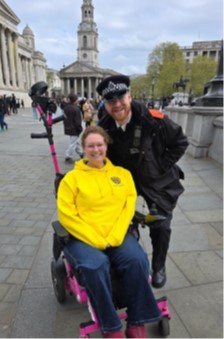
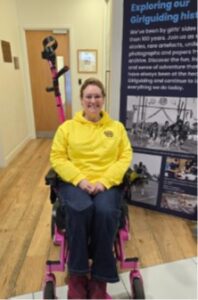
Left to right

 Jerra & ‘Barbara’ Out and About in London

 Jerra & ‘Barbara’ in Girl Guiding HQ

Jerra & ‘Barbara’ Travelling to London’

“We went on a badge quest which involved seeing several landmarks including Big Ben, Buckingham Palace and Trafalgar Square”,

“We also visited Girlguiding HQ. This is a huge deal to me, being able to join in with my friends around London and really enjoy it with them. 

“I have popped a photo below of us in The Foundling Museum”

Jerra finishes her letter saying “The improvement to my family has been amazing, I can go out for a ‘walk’ with my boyfriend and our dogs, something I haven’t been able to do for around 20 years. I can finally go birdwatching again with my Dad, a passion we’ve shared since I was little but had been taken away from us by my mobility issues. I can go out with my sister Georgia and my nieces Ada and Betsy and enjoy day trips with them. There are too many things for me to list, just small everyday things that people take for granted have been given back to me through your generosity.

There are not enough words to describe how grateful I am. To you it may just be a wheelchair, but to me it’s a whole new way of life. I hope you enjoyed the photos of me out and about on ‘Barbara’ as I have affectionately named her!

Thank you,

Jerra Eason

The brethren present all agreed that together as a Fraternity we can make a huge difference to members of our local community, enhancing lives and building lasting relationships.

We would like to thank those Lodges and Chapter that took part in this initiative and to all at the Cornwallis East Kent Freemasons Charity for their kindness, professionalism and help to make this possible for Jerra, without your help Jerra would have continued to struggle.


We need your stories, so please let the comms team know of the the good work your Lodges and Chapters are doing throughout East Kent. Just drop us a line on news@ekprovince.co.uk

Dover and Deal Cadets Mark 100 Years

Dover and Deal Cadets Mark 100 Years

Dover and Deal Sea Cadets Mark 100 Years

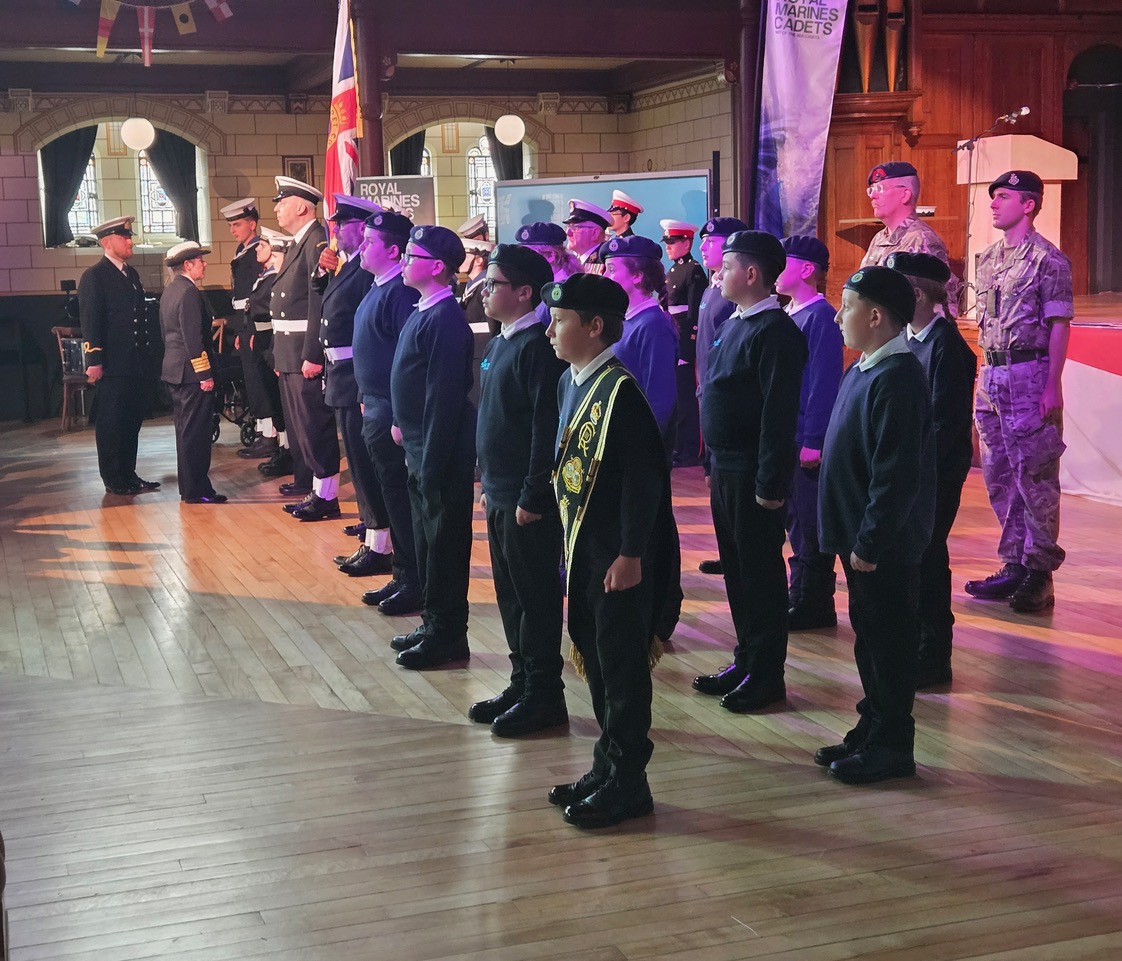
On Sunday, 8th June 2026, the streets of Dover were alive with excitement as the Dover and Deal Sea and Royal Marine Cadets paraded with pride to St Mary’s Church. This special day celebrated a remarkable milestone: a century of nurturing courage, friendship and adventure among young people in the picturesque White Cliffs country. Supported by the generous Globe & Laurel Lodge 4657 and Peace and Harmony Lodge 199, the Cadets have flourished and representing the Globe and Laurel Lodge at this wonderful event were Mark Simpson and Phil Rashbrook.
After a heartfelt church service, the Cadets marched with heads held high to Dover Town Hall, where families, guests and dignitaries eagerly anticipated their arrival. The hall buzzed with anticipation as the Commanding Officer inspected the Cadets, presenting each with a treasured ‘Challenge Coin’ – a symbol of achievement and belonging. Lively conversation filled the room as refreshments were shared and stories exchanged, all expressing admiration for the Cadets’ spirit.
As the afternoon drew to a close, voices united for the song ‘Sailing’ and the stirring sound of bagpipes echoed through the hall. The celebration was more than a commemoration, it was a testament to tradition and hope for the future. All joined in wishing the Dover and Deal Cadets another century of adventure and camaraderie.

We need your stories, so please let the comms team know of the the good work your Lodges and Chapters are doing throughout East Kent. Just drop us a line on news@ekprovince.co.uk

Folkestone Leas Lift CIO Appeal.

Folkestone Leas Lift CIO Appeal.

Folkestone Leas Lift CIO Appeal.

The Cornwallis East Kent Freemasons Charity were delighted to team up with WBro Bob Hadlow the Group 6 coordinator to assist bring together local units to support this extensive community focussed civil engineering project.

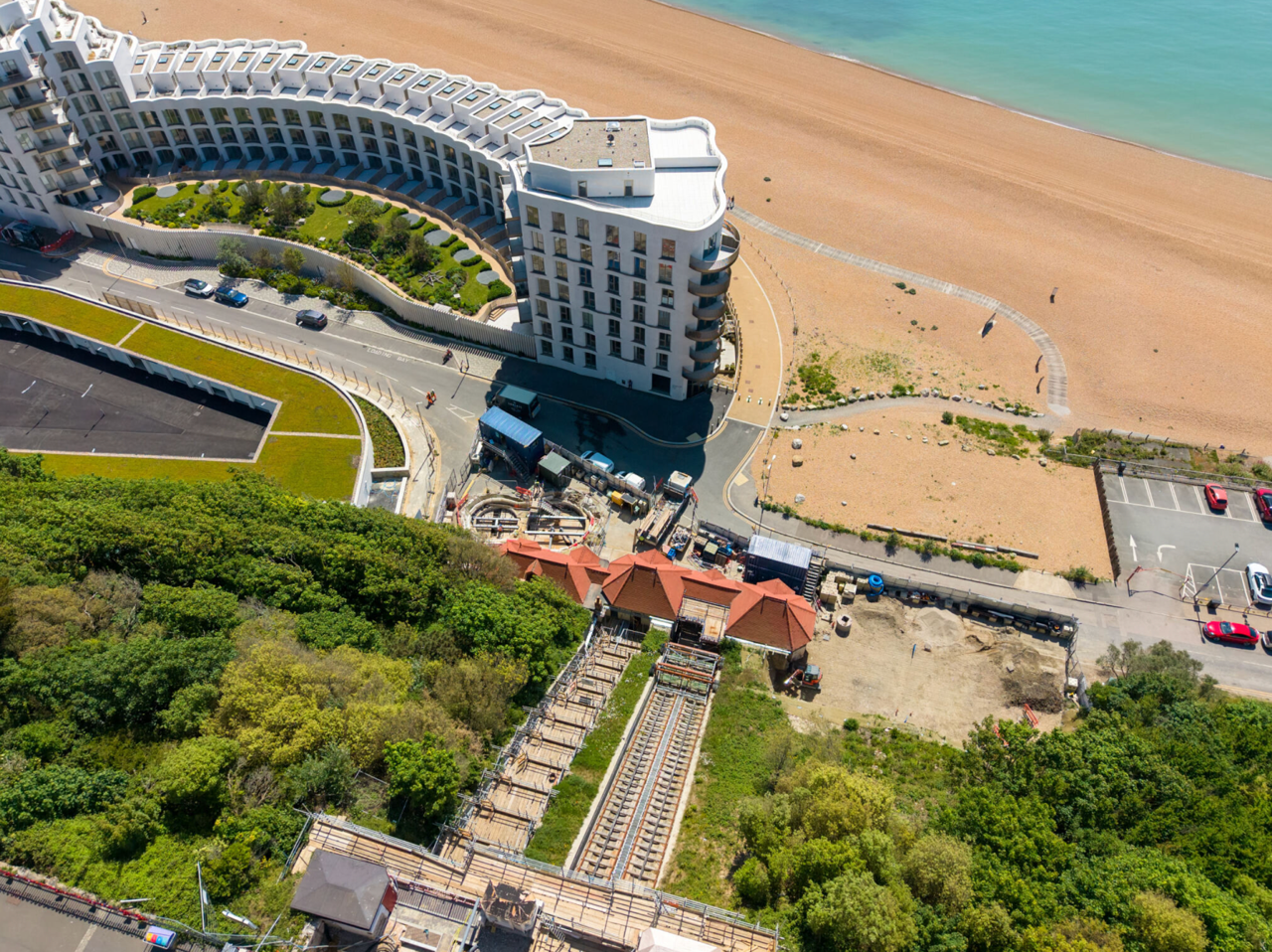
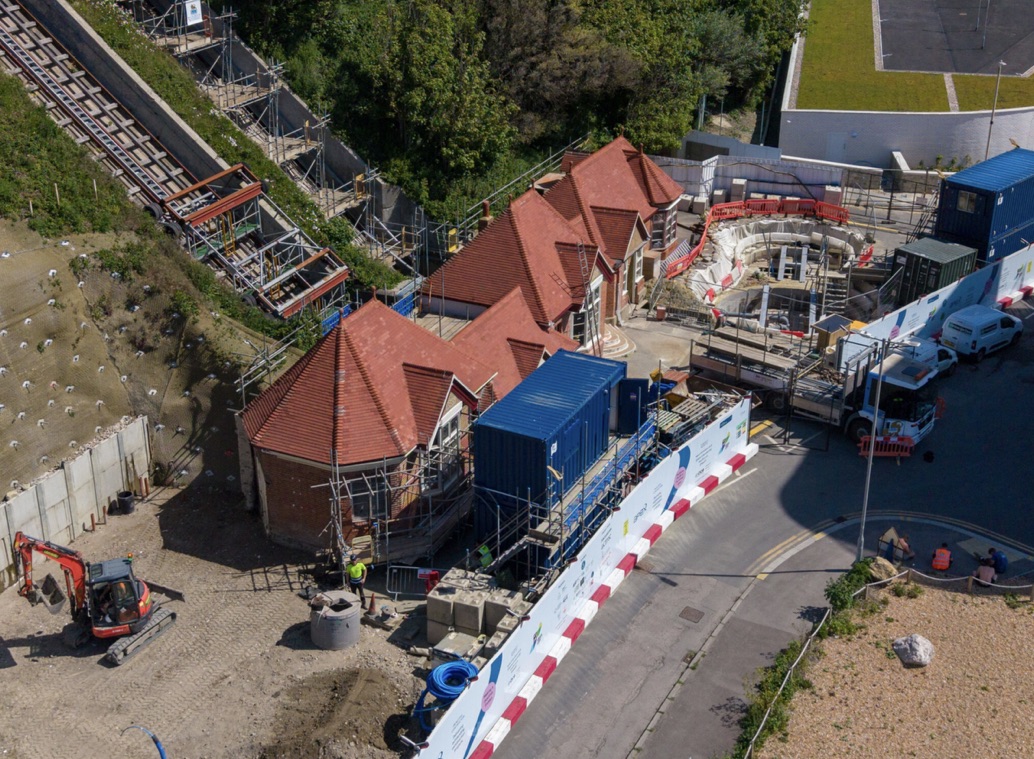
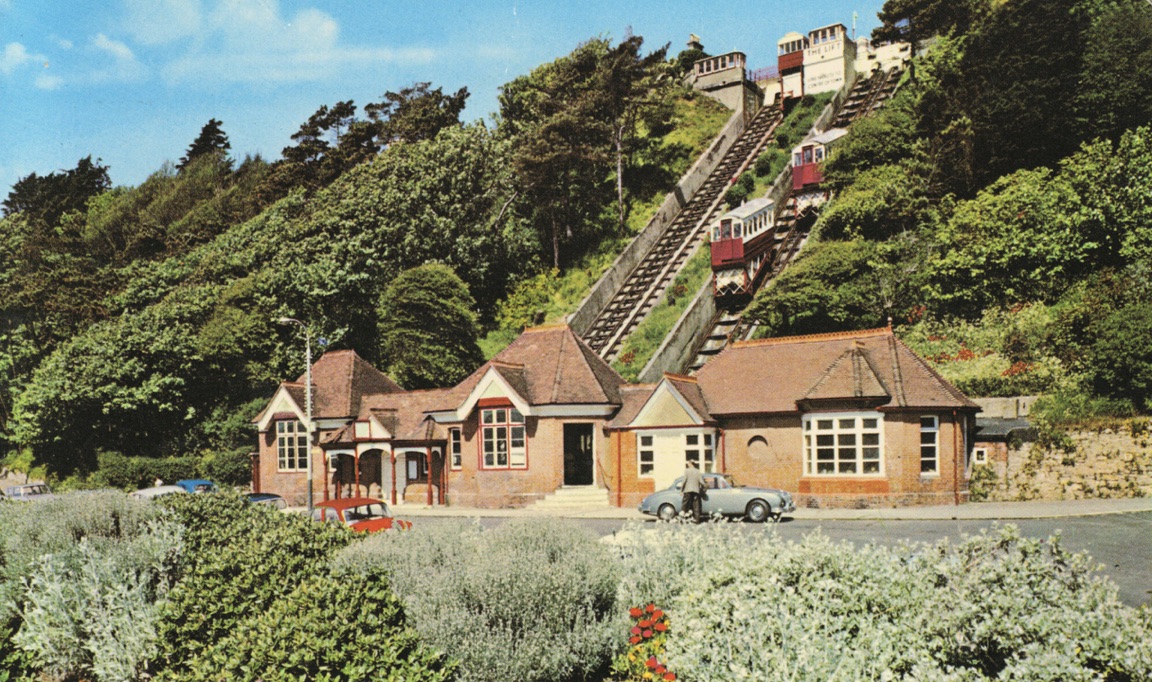
The historic Folkestone Leas Lift, a Grade II* listed funicular railway first opened in 1885, is currently being restored and will reopen in 2026. This large-scale project is overseen by the Folkestone Lease Lift Company, a Charitable Incorporated Organisation who has taken on the challenge of restoring this iconic transportation system. The scale of the project cannot be overstated, on top of the complex engineering work, fund raising falls to them too. The National Lottery made a generous match funding grant, leaving the charity to make up the difference. The charities dynamic Chair of Trustees Cathy Beare continues to work hard raising funds locally to fill the funding gap.

The Lift is at the heart of Folkestone and is much loved by the community. Consultation which took place during 2020 saw a recurrent theme in the feedback they received from the community. It identified that people; particularly the elderly, those with ill health, disabilities or with young children were unable to visit the seafront area from the town centre, due to the steepness of the only alternative route on foot the nearby footpaths. Unless they had access to a car, a visit to the beach and harbour area was very difficult all the time the lift remained closed. It became clear the local community and regular visitors to the town retained a great fondness for this historic transportation system, driving the need for action.

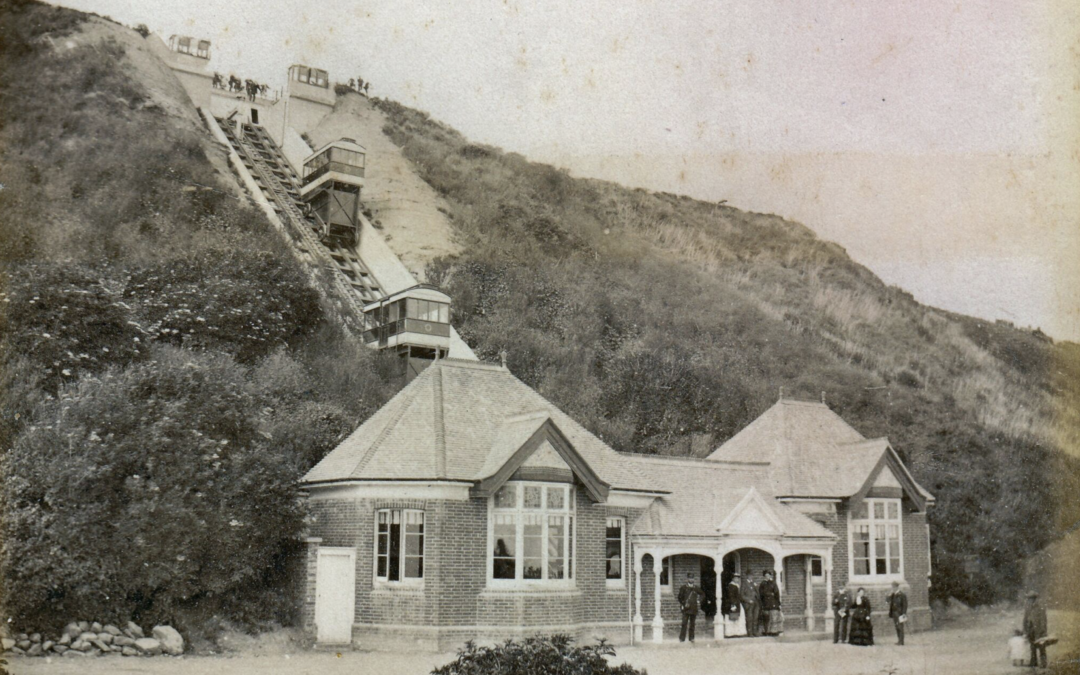
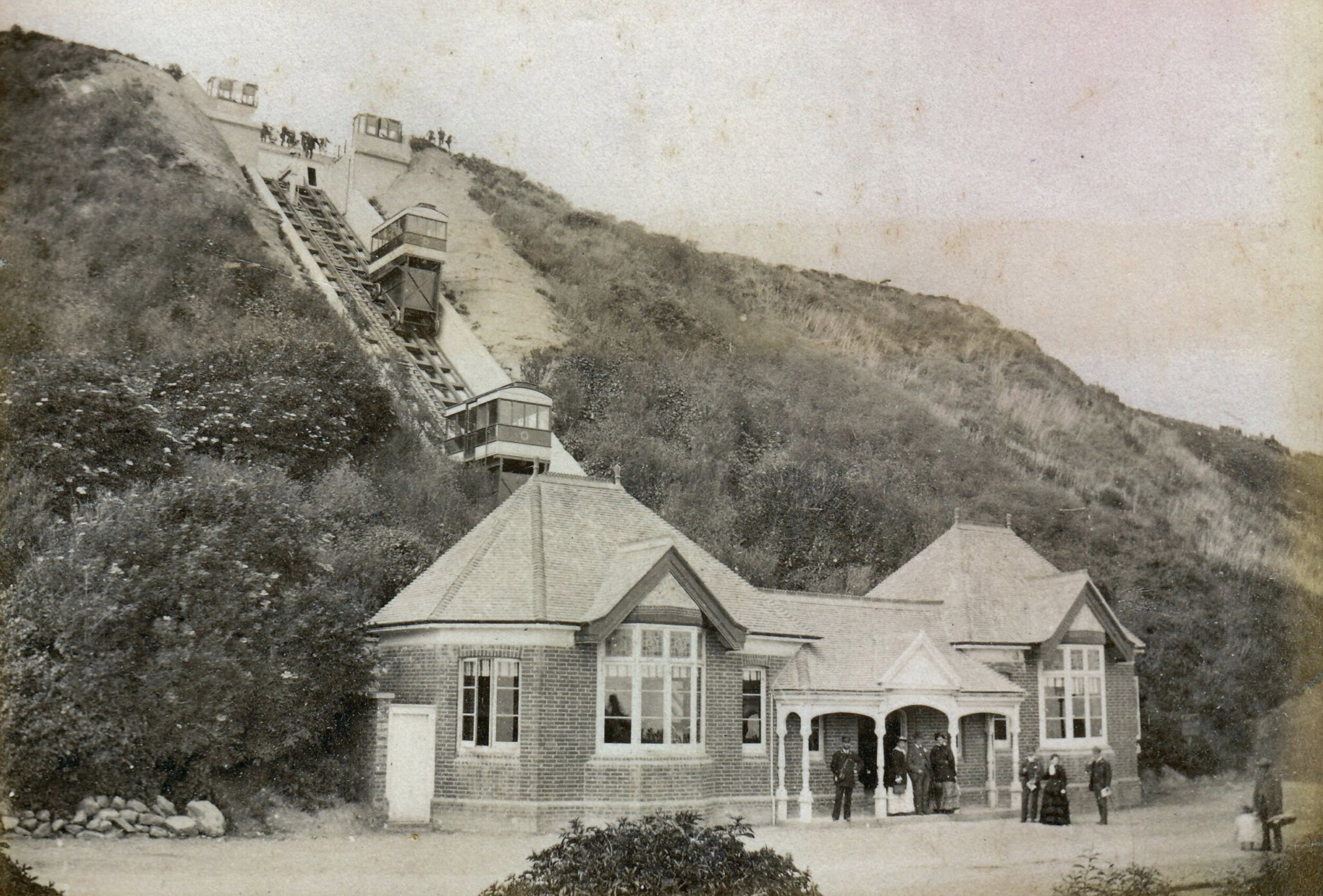
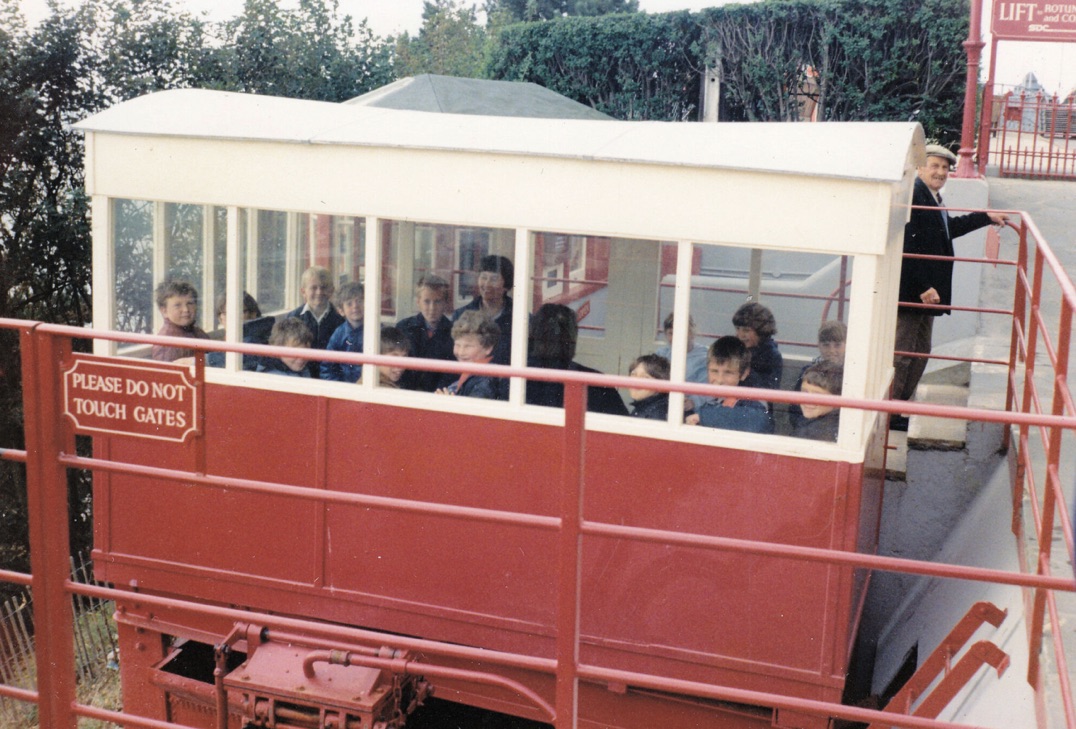
The Lift in 1885

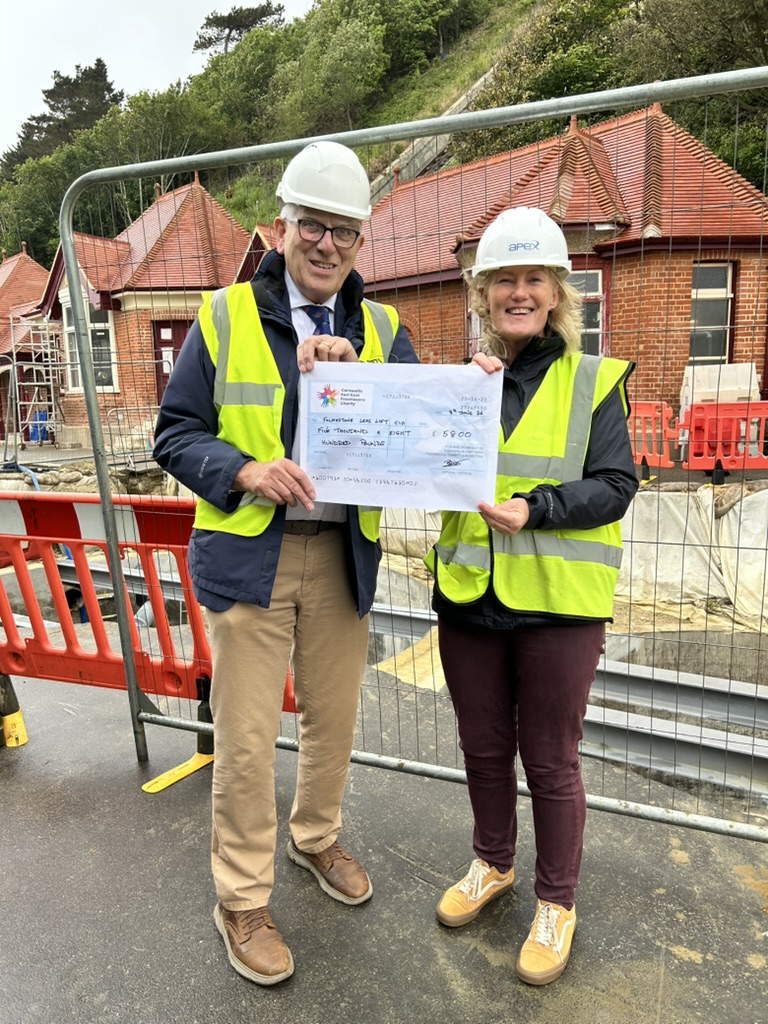
The charity reached out to the community including local Lodges, Chapters and the CEKFC seeking financial assistance. Their response was truly outstanding, raising £2900. The trustees of the CEKFC were delighted to double the members contribution which led to a total donation of £5800. This is yet another example of local Masons working to make a difference in our local communities. The units involved included:

Temple Lodge No 558
Temple Chapter No 558
Castle Lodge No 1436
Castle Chapter No 1436
Wakefield Lodge No 6059
Shorncliffe Lodge No 4330
Prince Edwins Lodge No 125
Prince Edwins Chapter No 125
Commemoration Lodge No 5329
SETECH Lodge No 8185
Stour Lodge No 2305
Provincial Grand Stewards Lodge No 5866
Valley of Elham Lodge No 6649

WBro Peter West handing cheque to Cathy Beare Chair of Trustees.

We need your stories, so please let the comms team know of the the good work your Lodges and Chapters are doing throughout East Kent. Just drop us a line on news@ekprovince.co.uk

An Evening of Inspiration and Remembrance: Dover Castle Lodge Backs Paralympian Hopeful and Honours a Legacy

An Evening of Inspiration and Remembrance: Dover Castle Lodge Backs Paralympian Hopeful and Honours a Legacy

Dover Castle Lodge Paralympian hopeful donation and memorial Donation

Write up from WBro Tony Watkins:

A presentation at a white table evening held on the 15th May 2026 by Dover Castle Lodge No 7202 was made to Miss Ella Briant, a 15-year-old schoolgirl who suffers from Albinism, is registered blind and has life limiting conditions. Ella, through her own ambition and her mother’s dedication, has undertaken a remarkable journey to become a Paralympian in the tandem cycling team for the 2028 Olympics.

This requires acceptance to the British Cycling Association and she is well supported by many famous Paralympians in her endeavours. She has a total commitment to training and this requires travelling countrywide in the qualification phase of team selection.

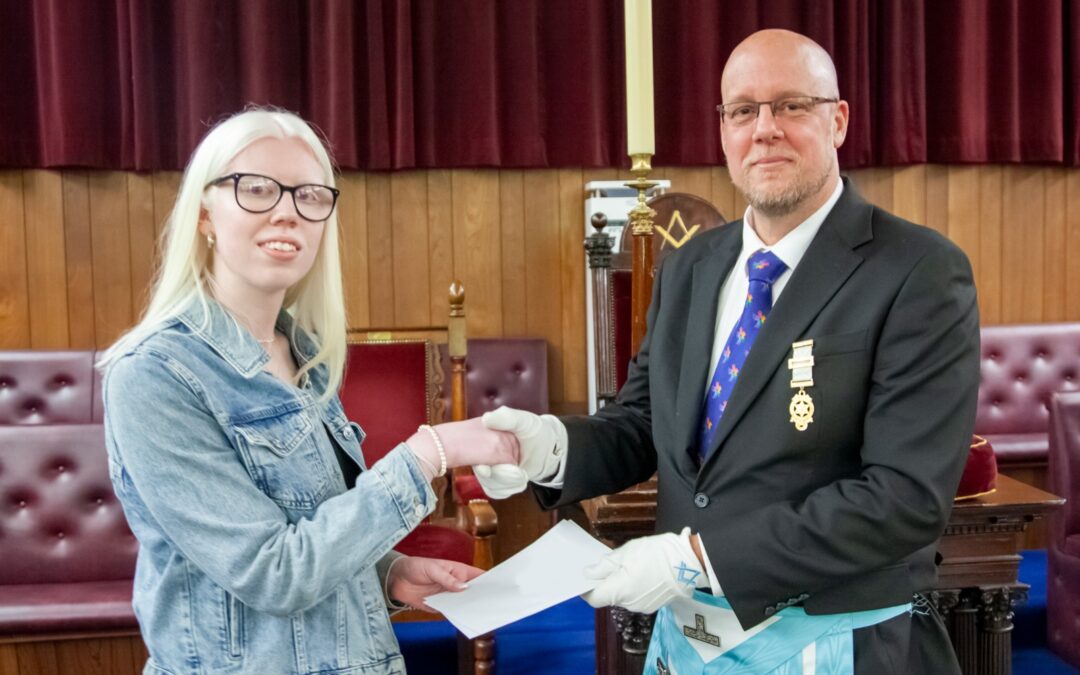
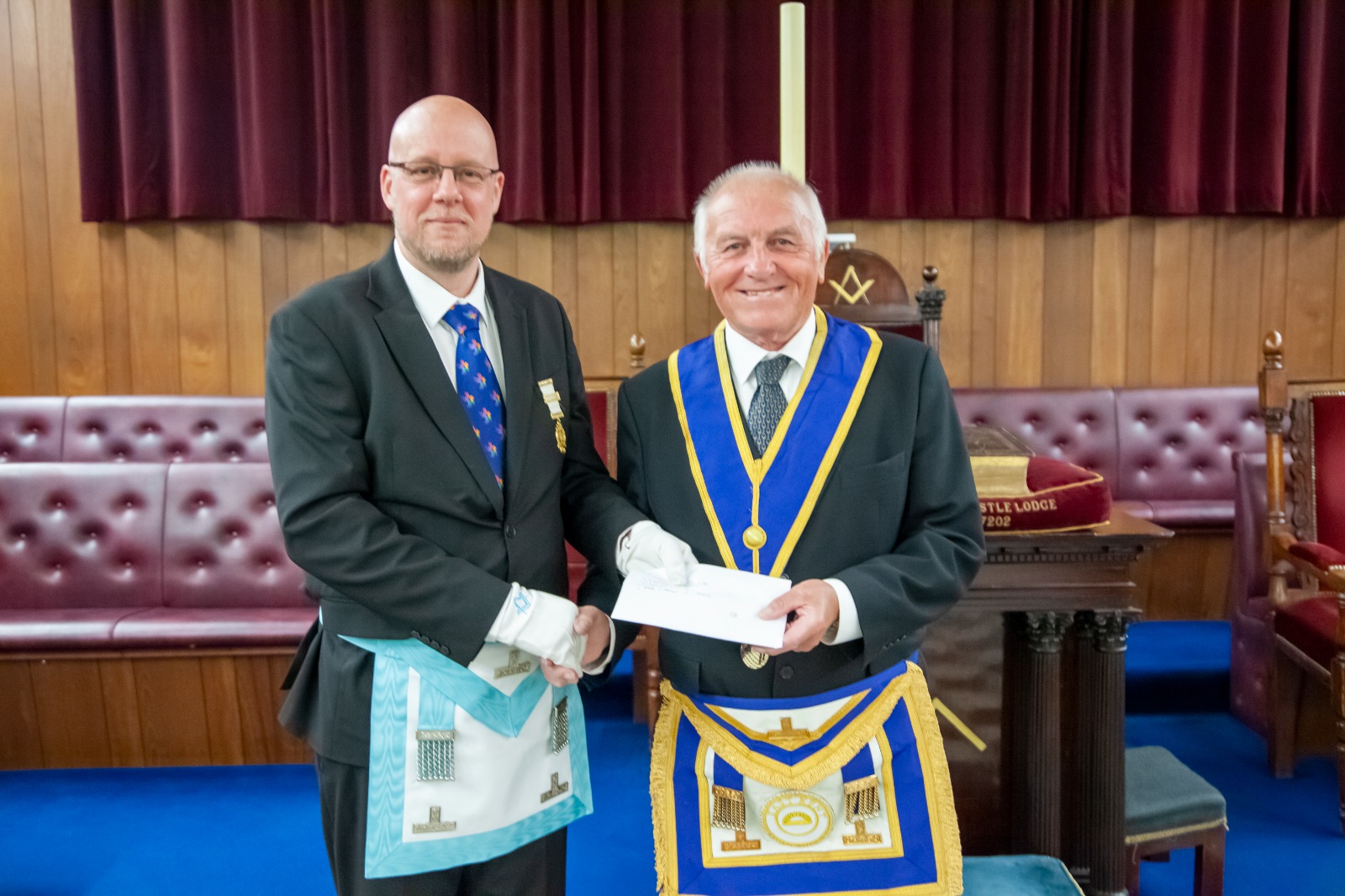
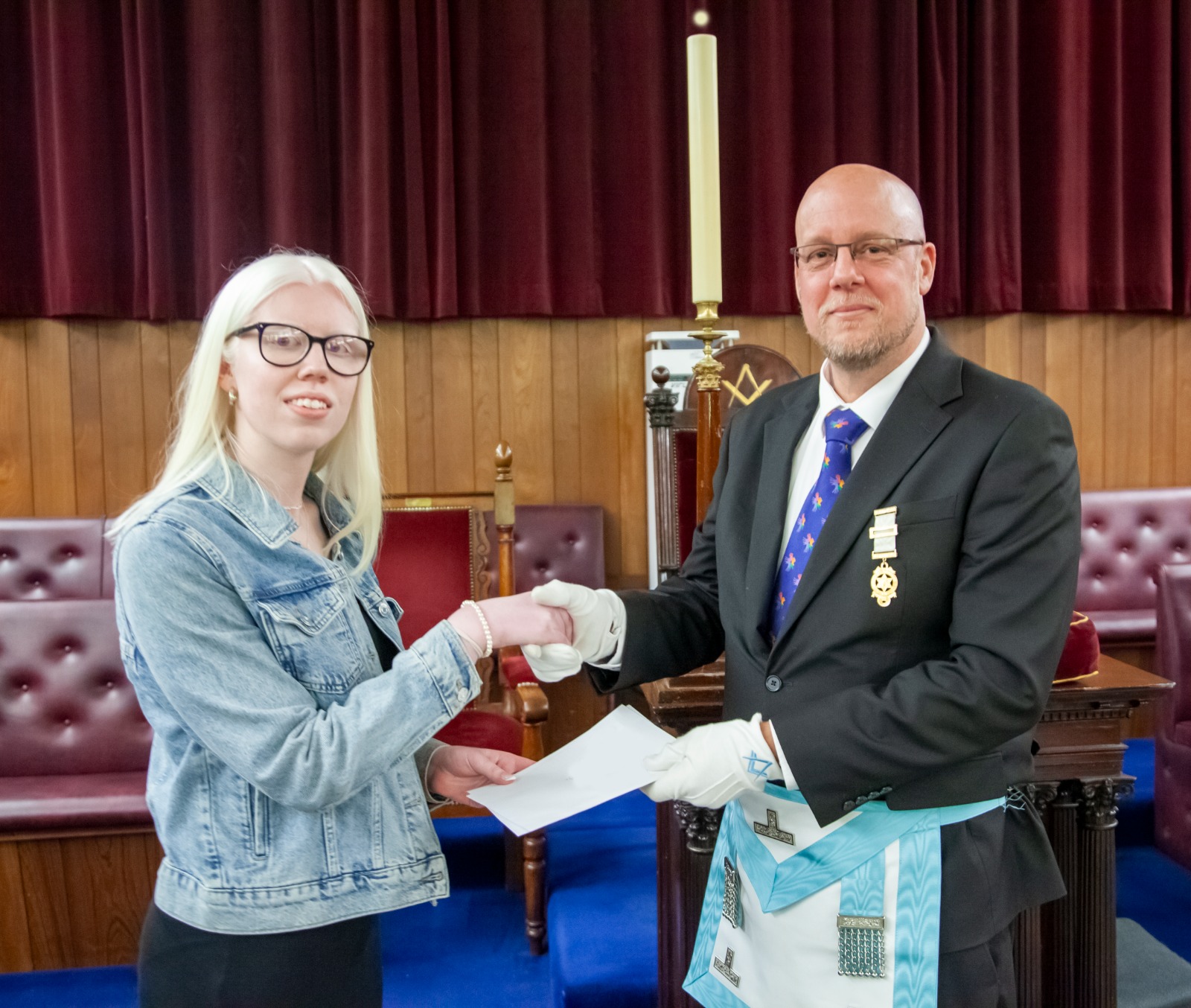
The Worshipful Master W.Bro. Ian Swallow on behalf of Dover Castle Lodge, and the sister Lodges/Chapters/CEKMC presented Ella and her mother Zoe with cheques totalling £2800.00 which will be used in the provision of training equipment and ancillary services.

In accepting the donation both Zoe and Ella gave a very interesting response to not only her condition, but to the long and arduous requirements of selection for Team GB.

On the same evening W.Bro. Fred Ross, Lodge of Harmony 133 Faversham, provided to the assembled audience a very interesting talk on ‘Hill 112 Normandy’ which was a pivotal battle allowing Allied forces to progress following the D Day Landings on the 6th June 1944. The Worshipful Master in thanking W.Bro. Fred, presented a cheque to assist in the maintenance of ‘The Hill 112 Memorial Foundation’

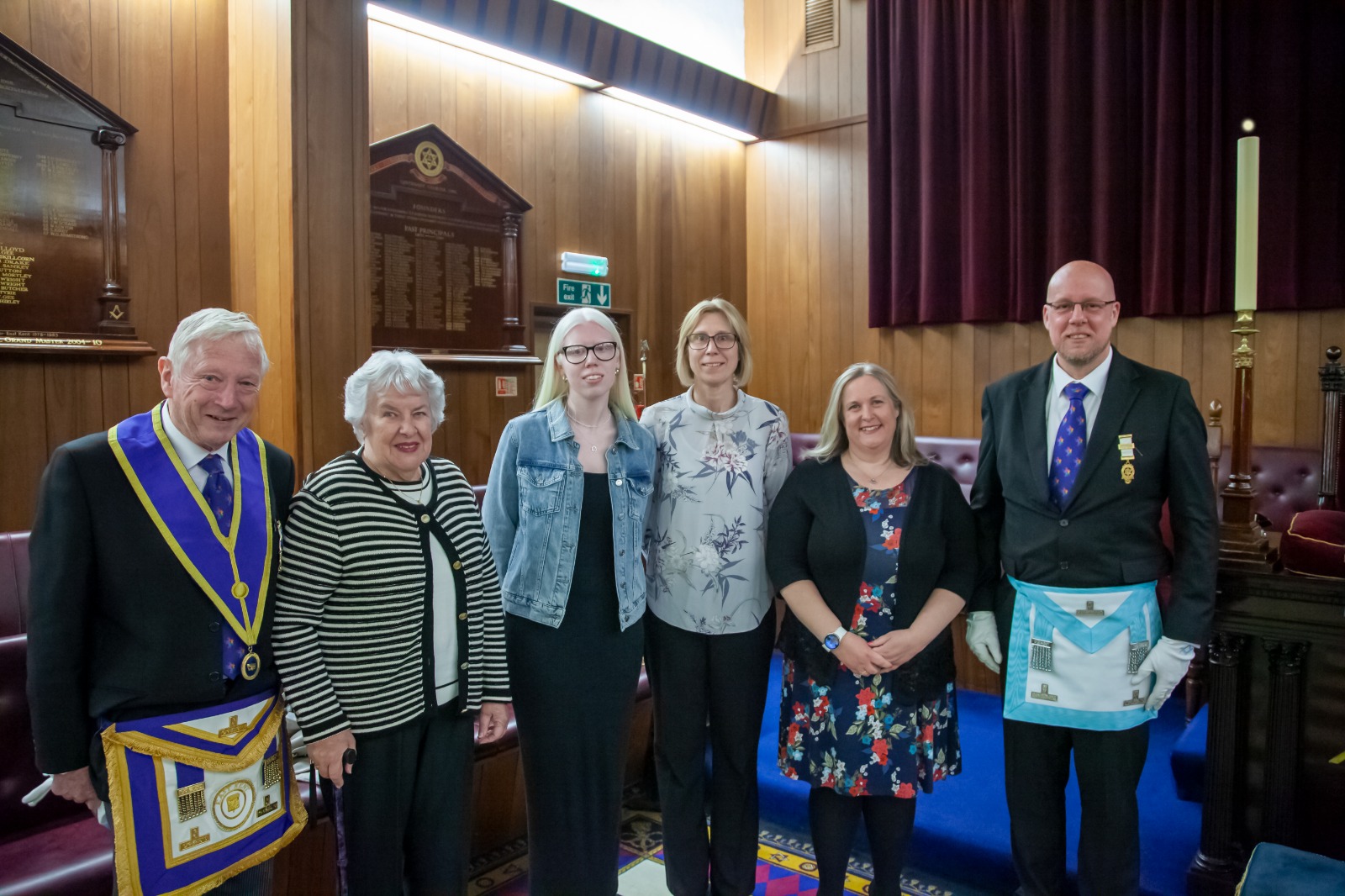
Photos showing – Worshipful Master Ina with Worshipful Brother Fred. Worshipful Master. Ian and Chantalle Swallow, Zoe & Ella Briant, Worshipful Brother. Tony and Alison Watkins.

We need your stories, so please let the comms team know of the the good work your Lodges and Chapters are doing throughout East Kent. Just drop us a line on news@ekprovince.co.uk

Freemasonry Without Barriers

Freemasonry Without Barriers

A real example of how Lodges can support members with additional needs while preserving full participation in Lodge life

In Freemasonry, inclusion is not defined by uniformity, but by participation.

For Richard Greenwood, that principle is not theoretical — it is lived experience. A member of Oxleas Wood Lodge and Wellington Lodge, Richard has navigated a lifetime of visual impairment alongside a highly active personal, professional, and Masonic journey.

Born prematurely in 1961 and registered blind at just 18 months old, Richard’s life has been shaped by adaptation from the very beginning. Yet his story is not defined by limitation, but by achievement — academic success, public service, family life, and a long-standing commitment to Freemasonry.

“I have been given every opportunity to participate as fully as any other member,” he reflects.

His experience offers Lodges a powerful example of what inclusion looks like in practice — not in principle.
Richard Far Right

A life built on resilience and contribution

Richard’s early life began with unexpected complications following premature birth, which led to severe visual impairment. Despite this, he progressed through residential education for visually impaired children before moving into mainstream schooling.

He later attended Lancaster University, earning a degree in Social Administration, before building a career in public service, including roles within the RNIB, local government, and the Royal London Society for Blind People.

Alongside his professional life, Richard also served as a councillor and trained as a careers officer. His life has consistently combined independence, leadership, and public contribution.

In 2017, Richard experienced a cardiac arrest, which resulted in a hypoxic brain injury, affecting short-term memory, speech, and processing. Yet even this major life event did not diminish his engagement with Freemasonry or his commitment to remaining active within his Lodges.

Finding a place in Freemasonry

Richard first joined Freemasonry in the mid-1990s, introduced by a fellow councillor. He also had a family connection — his grandfather had been a Mason in Manchester and North Wales.

“I think my grandfather’s involvement was an influential factor,” he explains, “but I also like the learning, the ritual, and the fellowship.”

From the outset, Richard found a strong sense of belonging.

“I played a full part in my Lodge… I was accepted and welcomed, as were my guide dogs.”

That inclusion extended to all aspects of Lodge life — including his guide dogs, one of whom even had an apron made by a Lodge member’s wife.

Over time, Richard progressed through the offices, served as Worshipful Master twice, and received his 30-year certificate — a reflection of sustained, active participation.

Adapting in practice — not in principle

When asked about adjustments within the Lodge, Richard is clear that most changes have developed naturally over time rather than through formal intervention.

Rather than fixed systems, support has been built through observation, communication, and familiarity.

Key adaptations include:

  • Ensuring additional space for his guide dog during meetings and dining
  • Providing large print and Braille ritual materials where needed
  • Offering discreet verbal prompts during ceremonies when required
  • Supporting navigation of raffle draws and festive board activities
  • Assisting with practicalities such as dining arrangements and booking

Some adjustments are small, but meaningful. For example, ensuring the guide dog is accommodated comfortably — and, as Richard notes with humour, ensuring “no one feeds the dog at festive boards, no matter how persuasive the look might be.

More broadly, support is often informal but consistent — members naturally assisting as part of Lodge culture rather than through a structured process.

Communication and flexibility

A key theme in Richard’s experience is communication.

Adjustments are not static; they evolve with circumstances. As Richard explains, he requires additional support with certain ceremonial signs and visual references, particularly in more complex sections of the ceremony.

However, rather than being a barrier, this has been addressed through preparation, rehearsal, and mutual understanding.

The result is a flexible approach that allows him to remain fully engaged in Lodge activities while maintaining the integrity of the ceremony.

Belonging through connection

Perhaps the most important outcome of these adjustments has been relational rather than procedural.

“I would say that closer bonds are created when extra support or nurture is evident,” Richard reflects.

Rather than creating distance, support has strengthened the connection. Fellow members become more aware, more engaged, and more attentive to each other’s needs.

These experiences are not seen as exceptions but as part of Lodge life, reinforcing a culture of care and mutual respect.

Challenging assumptions

When discussing barriers, Richard is clear that the greatest challenges are not always physical, but perceptual.

“The barriers which exist in Freemasonry are the same as elsewhere in society,” he says, “and are about uninformed judgements and assumptions.”

His experience highlights the importance of openness — not assuming limitations, but instead understanding individual strengths and working from there.

“Inclusion is about getting to know individuals,” he explains. “Their strengths and their weaknesses — and supporting both.”

A naturally inclusive Craft

Richard describes Freemasonry as naturally inclusive, but acknowledges that experience can vary depending on the culture and approach of individual Lodges.

“Inclusion depends on the make-up and personalities of the Lodge,” he notes, highlighting the importance of awareness and openness at a local level.

For him, the foundation is already there — what matters is how it is applied in practice.

Advice for Lodges and candidates

Richard’s advice to Lodges is simple and practical:

  • Focus on communication
  • Understand the individual
  • Avoid assumptions
  • Adapt where reasonably possible

For those considering Freemasonry but uncertain due to accessibility concerns, his message is equally direct:

“I wouldn’t hesitate to recommend Freemasonry from my experience… I have been accepted, welcomed, and given meaningful roles within both of my Lodges.”

He currently serves as Chaplain in both Lodges — a role that reflects not only trust, but active participation and respect.

Conclusion

Richard’s journey demonstrates that accessibility in Freemasonry is not defined by structures alone, but by people.

Through small, thoughtful adjustments and a culture of openness, Lodges can ensure that every member is not only accommodated but fully included.

His experience shows that when communication is open and attitudes are flexible, Freemasonry remains what it has always aspired to be — a place of belonging, contribution, and shared purpose.

Article from FMT Live

We need your stories, so please let the comms team know of the the good work your Lodges and Chapters are doing throughout East Kent. Just drop us a line on news@ekprovince.co.uk