Freemasonry Without Barriers

Freemasonry Without Barriers

A real example of how Lodges can support members with additional needs while preserving full participation in Lodge life

In Freemasonry, inclusion is not defined by uniformity, but by participation.

For Richard Greenwood, that principle is not theoretical — it is lived experience. A member of Oxleas Wood Lodge and Wellington Lodge, Richard has navigated a lifetime of visual impairment alongside a highly active personal, professional, and Masonic journey.

Born prematurely in 1961 and registered blind at just 18 months old, Richard’s life has been shaped by adaptation from the very beginning. Yet his story is not defined by limitation, but by achievement — academic success, public service, family life, and a long-standing commitment to Freemasonry.

“I have been given every opportunity to participate as fully as any other member,” he reflects.

His experience offers Lodges a powerful example of what inclusion looks like in practice — not in principle.
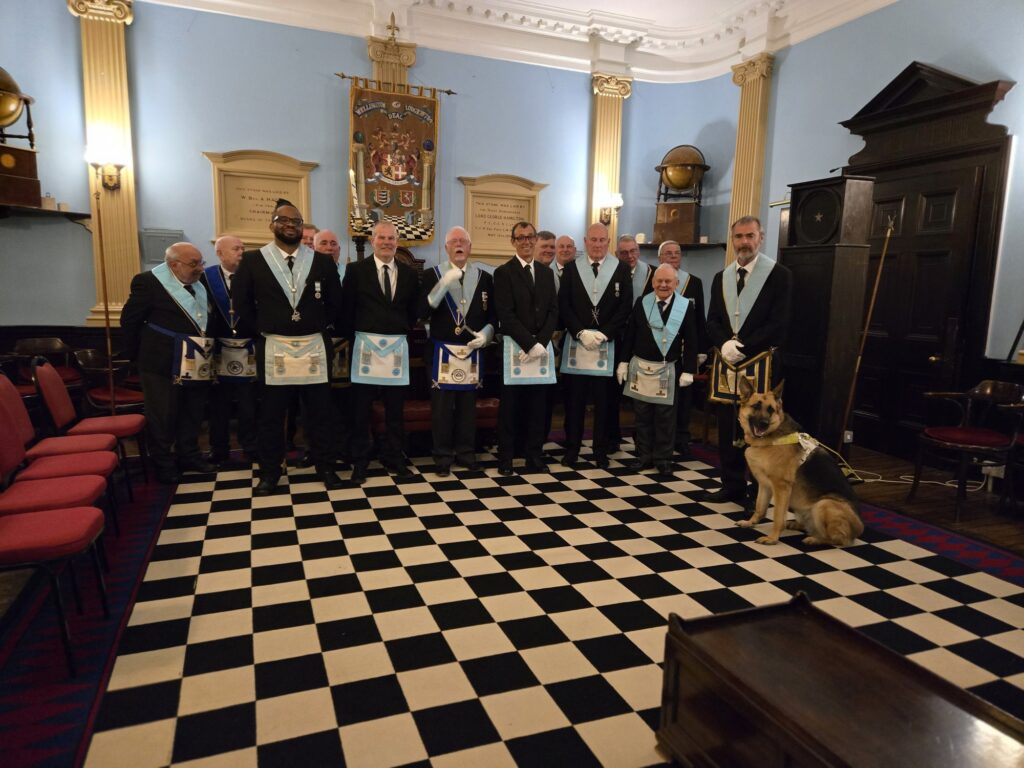
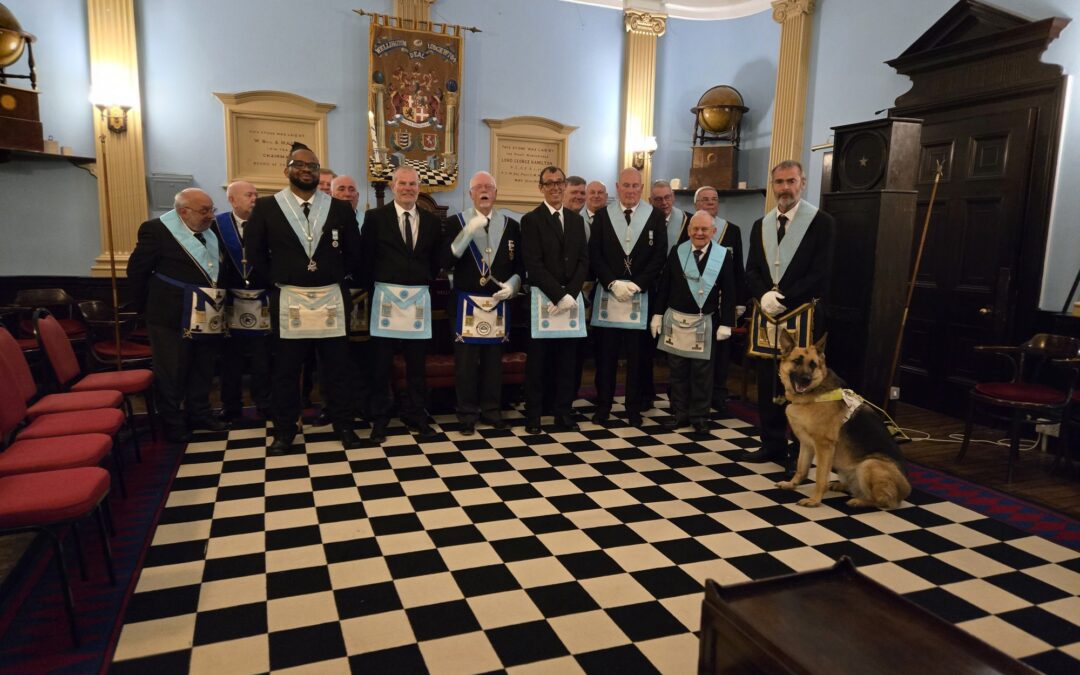
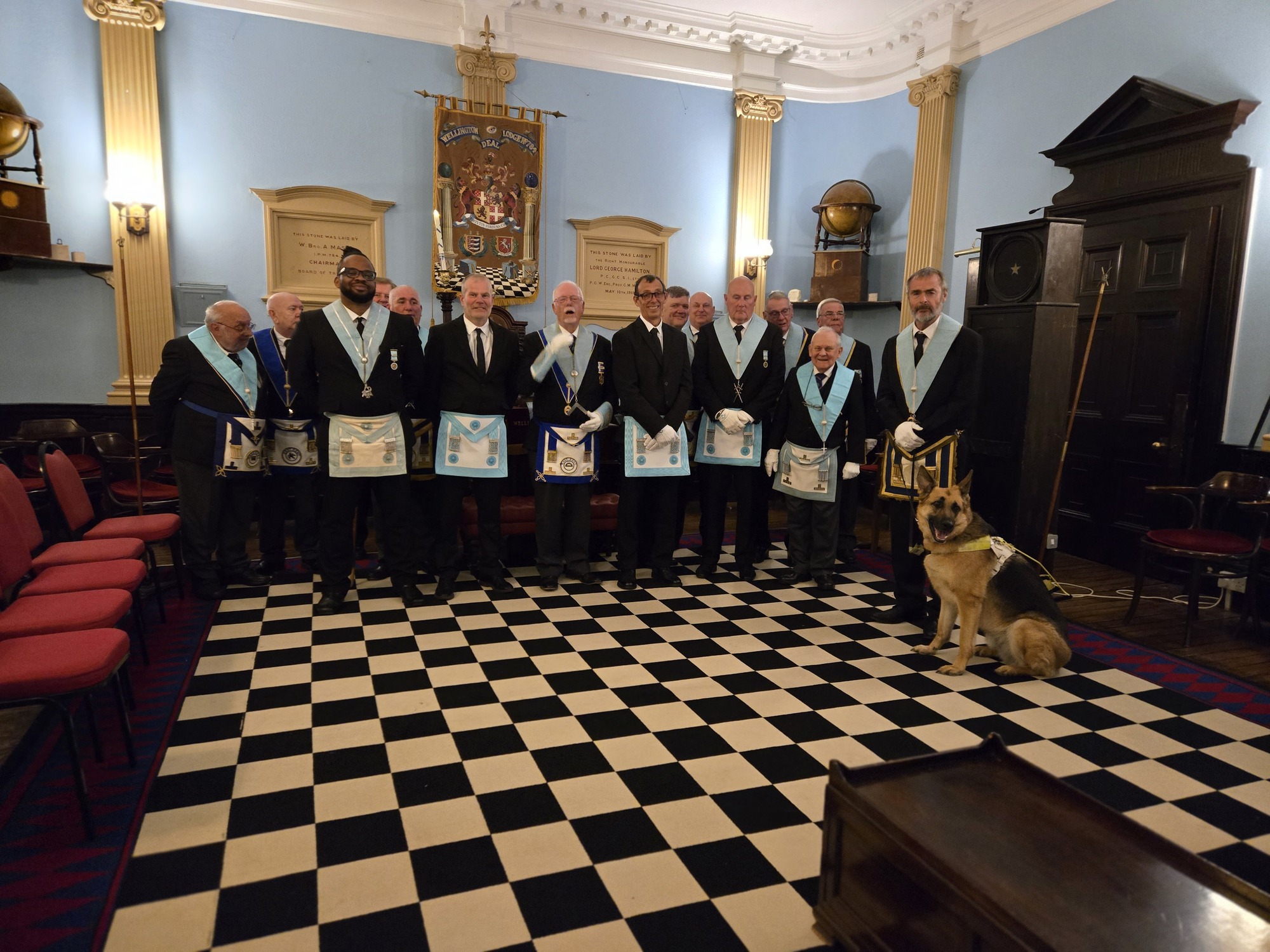
Richard Far Right

A life built on resilience and contribution

Richard’s early life began with unexpected complications following premature birth, which led to severe visual impairment. Despite this, he progressed through residential education for visually impaired children before moving into mainstream schooling.

He later attended Lancaster University, earning a degree in Social Administration, before building a career in public service, including roles within the RNIB, local government, and the Royal London Society for Blind People.

Alongside his professional life, Richard also served as a councillor and trained as a careers officer. His life has consistently combined independence, leadership, and public contribution.

In 2017, Richard experienced a cardiac arrest, which resulted in a hypoxic brain injury, affecting short-term memory, speech, and processing. Yet even this major life event did not diminish his engagement with Freemasonry or his commitment to remaining active within his Lodges.

Finding a place in Freemasonry

Richard first joined Freemasonry in the mid-1990s, introduced by a fellow councillor. He also had a family connection — his grandfather had been a Mason in Manchester and North Wales.

“I think my grandfather’s involvement was an influential factor,” he explains, “but I also like the learning, the ritual, and the fellowship.”

From the outset, Richard found a strong sense of belonging.

“I played a full part in my Lodge… I was accepted and welcomed, as were my guide dogs.”

That inclusion extended to all aspects of Lodge life — including his guide dogs, one of whom even had an apron made by a Lodge member’s wife.

Over time, Richard progressed through the offices, served as Worshipful Master twice, and received his 30-year certificate — a reflection of sustained, active participation.

Adapting in practice — not in principle

When asked about adjustments within the Lodge, Richard is clear that most changes have developed naturally over time rather than through formal intervention.

Rather than fixed systems, support has been built through observation, communication, and familiarity.

Key adaptations include:

  • Ensuring additional space for his guide dog during meetings and dining
  • Providing large print and Braille ritual materials where needed
  • Offering discreet verbal prompts during ceremonies when required
  • Supporting navigation of raffle draws and festive board activities
  • Assisting with practicalities such as dining arrangements and booking

Some adjustments are small, but meaningful. For example, ensuring the guide dog is accommodated comfortably — and, as Richard notes with humour, ensuring “no one feeds the dog at festive boards, no matter how persuasive the look might be.”

More broadly, support is often informal but consistent — members naturally assisting as part of Lodge culture rather than through a structured process.

Communication and flexibility

A key theme in Richard’s experience is communication.

Adjustments are not static; they evolve with circumstances. As Richard explains, he requires additional support with certain ceremonial signs and visual references, particularly in more complex sections of the ceremony.

However, rather than being a barrier, this has been addressed through preparation, rehearsal, and mutual understanding.

The result is a flexible approach that allows him to remain fully engaged in Lodge activities while maintaining the integrity of the ceremony.

Belonging through connection

Perhaps the most important outcome of these adjustments has been relational rather than procedural.

“I would say that closer bonds are created when extra support or nurture is evident,” Richard reflects.

Rather than creating distance, support has strengthened the connection. Fellow members become more aware, more engaged, and more attentive to each other’s needs.

These experiences are not seen as exceptions but as part of Lodge life, reinforcing a culture of care and mutual respect.

Challenging assumptions

When discussing barriers, Richard is clear that the greatest challenges are not always physical, but perceptual.

“The barriers which exist in Freemasonry are the same as elsewhere in society,” he says, “and are about uninformed judgements and assumptions.”

His experience highlights the importance of openness — not assuming limitations, but instead understanding individual strengths and working from there.

“Inclusion is about getting to know individuals,” he explains. “Their strengths and their weaknesses — and supporting both.”

A naturally inclusive Craft

Richard describes Freemasonry as naturally inclusive, but acknowledges that experience can vary depending on the culture and approach of individual Lodges.

“Inclusion depends on the make-up and personalities of the Lodge,” he notes, highlighting the importance of awareness and openness at a local level.

For him, the foundation is already there — what matters is how it is applied in practice.

Advice for Lodges and candidates

Richard’s advice to Lodges is simple and practical:

  • Focus on communication
  • Understand the individual
  • Avoid assumptions
  • Adapt where reasonably possible

For those considering Freemasonry but uncertain due to accessibility concerns, his message is equally direct:

“I wouldn’t hesitate to recommend Freemasonry from my experience… I have been accepted, welcomed, and given meaningful roles within both of my Lodges.”

He currently serves as Chaplain in both Lodges — a role that reflects not only trust, but active participation and respect.

Conclusion

Richard’s journey demonstrates that accessibility in Freemasonry is not defined by structures alone, but by people.

Through small, thoughtful adjustments and a culture of openness, Lodges can ensure that every member is not only accommodated but fully included.

His experience shows that when communication is open and attitudes are flexible, Freemasonry remains what it has always aspired to be — a place of belonging, contribution, and shared purpose.

Article from FMT Live
We need your stories, so please let the comms team know of the the good work your Lodges and Chapters are doing throughout East Kent. Just drop us a line on news@ekprovince.co.uk

East Kent Masonic Fishing Charity casts off at Horsham Lakes

East Kent Masonic Fishing Charity casts off at Horsham Lakes


East Kent Masonic Fishing Charity Launches Season with a Highly Successful First Event

The East Kent Masonic Fishing Charity began its 2026 season in excellent style with its first event of the year at Horsham Lakes in Upchurch. The day proved to be a resounding success, with ideal weather, enthusiastic participation, and an abundance of fish helping to create lasting memories for everyone involved.

Fifteen students from Helen Allison School and Abbey Court School were warmly welcomed by our dedicated Branch volunteers, who provided guidance, encouragement, and one‑to‑one support throughout the day. The lakes were exceptionally productive, with one volunteer and his young angler achieving an extraordinary milestone of 100 fish landed between them. For several students, this was their first introduction to angling, and their excitement was evident from start to finish.

The smooth running of the event was made possible by the commitment of a hardworking team of volunteers and supporters. Chairman David Alexander was present throughout, supported by three additional charity helpers who ensured the day unfolded seamlessly. Catering was expertly delivered by two members of Thyme to Dine Catering, who kept participants, volunteers, and guests well fed and refreshed.

Safety remained a top priority, with two members of St John Ambulance in attendance to provide reassurance and support where needed. Their presence contributed to the calm, enjoyable atmosphere that allowed the children to fully engage with the experience.

A highlight of the day was the visit of the charity’s “A‑lister,” Eddie Halpin, 3rd Provincial Grand Principal. Eddie spent time with the students and volunteers, sharing in their achievements and celebrating the success of the event. He concluded the day by presenting medals and certificates to the children, recognising their enthusiasm, perseverance, and accomplishments on the water.

The East Kent Masonic Fishing Charity continues to offer meaningful opportunities for young people to enjoy the outdoors, build confidence, and discover the rewards of angling in a safe and supportive environment. With such a strong start to the year, the season ahead promises to be both memorable and impactful for all who take part.


We need your stories, so please let the comms team know of the the good work your Lodges and Chapters are doing throughout East Kent. Just drop us a line on news@ekprovince.co.uk

Group 8 A Boost for the T.L.C

Group 8 A Boost for the T.L.C

​Group 8
A Boost for the Teddies for Loving Care

Several of the Group 8’s Committee of Coordinators, from the Margate Masonic Centre (Temple House) and their wives formed a table at the closing of the 2025 Festival held at the Leas Cliff Hall in Folkestone.
Sat in the centre of the table courtesy of the T.L.C was a Teddy Bear, which it was hoped, would be taken away and additional funds would be raised for this very worthwhile, child orientated charity.

Jean Kennett, wife of the Committee’s secretary, suggested that at the Centres 4 Christmas Lunches organised by the Lodges the bear could make an appearance where pledges could be made to give it a home.
Agreed by the Lodge’s membership ‘Temple Ted’ made an appearance at each Christmas Lunch. Temple Ted was won by a non-masonic guest at the final lunch. This very simple initiative raised a total of £300.

When all diaries allowed the coordinators organised a presentation Lunch at the Margate Centre on Sunday 12th April, where the Centres Lodges were represented. Paul Routley and Geraldine Palmer along with Malcolm and Coral Harley were honoured guests. Paul gave a very interesting talk on the history of the T.L.C and Malcolm on his role as local distributor.

With a raffle on the day and our obligatory Heads and Tails a further £350 was raised.
Working together and with enthusiastic support we were able to present £650 to Paul for distribution within the charity.
After a very substantial Sunday Lunch we were all like ‘Temple Ted’ – Stuffed!

Pictured are Jean Kennett, Paul Routley and Malcolm Harley.

article by Jim Mason
Group 8 Chairman

Roger pictured centre

We need your stories, so please let the comms team know of the the good work your Lodges and Chapters are doing throughout East Kent. Just drop us a line on news@ekprovince.co.uk

WBro Roger Wilkes PPSGW Passed to the Grand Lodge Above on 24th March 2026, aged 77

WBro Roger Wilkes PPSGW Passed to the Grand Lodge Above on 24th March 2026, aged 77

​

Worshipful Brother  Roger Wilkes Past Provincial Senior Grand Warden 

Passed to the Grand Lodge Above on 24th March 2026, aged 77

A member of the Loyal and True Lodge No. 4050 and Brownrigg Chapter No. 1424

In 2008, following his recent return to shooting, Roger placed an advertisement in the provincial newsletter inviting fellow Masons with similar interests to join him in clay shooting. The initial meeting was held at Hawley Shooting Ground, marking the beginning of a regular event that grew steadily in participation. In 2009, the East Kent Clay Pigeon Shooting Club was established, with Roger duly elected as Secretary and a constitution adopted, aiming to promote the sport, strengthen Masonic fellowship and support charitable initiatives at local, national, and international levels.

Roger pictured centre

Roger pictured front and center

Roger actively fostered relationships with other provinces and co-ordinated numerous inter-provincial competitions. East Kent first entered the nationals in 2009 and later hosted the National Championships in Canterbury in 2013. His vision for a national organisation materialised in February 2015, when representatives from 21 provinces convened in Bristol to establish the National Association of Masonic Clay Shooting Societies (NAMCSS). Roger was elected as Secretary, a position he held for the following decade, dedicating himself to organising both national and international events including the Annual National Masonic Competition and the Jonathon Spence Tercentenary Challenge, first held in 2017.

Roger has done so much for the sport of Masonic clay shooting and has left a lasting legacy within East Kent and beyond and will be sadly missed by all.

 Worshipful Brother Rob Styles London Grand Rank

East Kent Masonic Clay Shooting

Roger was always a champion of charity, here he is (far left) supporting Abigail’s Footsteps.

Photo from https://www.ugle.org.uk/discover-freemasonry/blog/east-kent-provincial-clay-shooting-team-visits-abigails-footsteps

We need your stories, so please let the comms team know of the the good work your Lodges and Chapters are doing throughout East Kent. Just drop us a line on news@ekprovince.co.uk

From Soldier to Survivor: Facing the Unthinkable

From Soldier to Survivor: Facing the Unthinkable

​

In life, there are moments that irrevocably split time in two: the events before and those that follow. For Shane Cooley, this division arrived on 5th September 2005 in the form of a devastating motorcycle accident on the streets of Sydney. What might seem to many as a tragic endpoint instead marks the beginning of an inspiring story of perseverance and hope that transformed tragedy into triumph.

Shane’s early years were marked by service, discipline and adventure. Born in 1974, he pursued a career in the Army Air Corps, later joining the Royal Corps of Signals. His exemplary service record included three deployments with the United Nations in the former Yugoslavia: a testament to his commitment and courage. After leaving the armed forces in 2002, he charted a new course as an engineer, moving to Sydney, Australia, in 2004. Life seemed promising and full of possibility.

All that changed in an instant when, on his motorbike journey home, a car pulled out in front of him. The resulting collision left Shane with catastrophic injuries: a broken neck, punctured lung, and multiple brain injuries (including sixteen documented trauma sites), alongside severe facial trauma. He slipped into a coma for three months, his life hanging in the balance. When he finally awoke, basic tasks such as walking, talking and eating were no longer automatic. He had to relearn them all. Memory loss further compounded his challenges, leaving him a stranger to his own identity and history.

Rehabilitation at Royal Northshore Hospital was gruelling. Shane often felt lost and confused, following therapists’ instructions without fully understanding their purpose. He likened his state to being a newborn with the mind of a man in his thirties, but with memories tantalisingly out of reach. His first attempts at independence—moving in a wheelchair and trying to walk—brought frustration, but also ignited his determination to improve.

After months of intense therapy, in March 2006 Shane was deemed fit to return home to England. The homecoming was surreal. Familiar faces appeared, yet their significance eluded him. The accident had interrupted the blood supply to his brain, causing stroke-like effects: right-sided weakness, impaired memory and a distorted sense of taste and smell. However, his visual memory remained intact, albeit stripped of the narrative that once made it meaningful.

Back in England, Shane found support through ‘Psicon’ in Canterbury, where a dedicated team of neuropsychologists, therapists and trainers guided his recovery. He gradually relearned to walk and talk, reconnecting with daily life and rediscovering independence.

As his rehabilitation progressed, Shane set himself a physical goal: training for the Bath Half Marathon. This seemed insurmountable at first, but with encouragement from Matt Lyons, his fitness trainer and qualified Mountain Leader, Shane persevered. He said that crossing the finish line in March 2008 became a powerful symbol of reclaimed autonomy and hope.

Matt’s influence reignited Shane’s passion for the outdoors, leading to the successful completion of his Mountain Leader assessment in October 2015. This qualification enabled him to give back as a Duke of Edinburgh Award Assessor, supporting young people across the UK. Through these roles, Shane rediscovered a sense of purpose and accomplishment, proving to himself and others that recovery was not just possible, but transformative.

Shane’s father initially struggled to understand the outcome and, in his search for answers, briefly formed misconceptions about Freemasonry, later recognised as unfounded. Shane decided to investigate for himself and, over time, found an unexpected source of community and healing.

Shane married Pippa in 2013. Pippa travelled to London by train with a friend who was a Freemason. Encouraged by his wife, Shane met him and found his openness challenged the myths and preconceptions he had inherited. Following an interview, Shane’s initiation and warm welcome to Romney Marsh Lodge No. 4743 in Dymchurch followed. There, Shane discovered that charity, integrity and lawful conduct are at the heart of Freemasonry. This understanding dispelled old misconceptions and replaced them with a sense of pride and belonging.

But in Freemasonry, Shane encountered a new hurdle: the memorisation of ritual, a daunting prospect given his memory difficulties. Shane was adamant he would meet this challenge without reading from the book and, supported by his neuropsychologist and encouraged by Lodge members, he steadily progressed through the Offices of the Lodge, culminating in his Installation as Worshipful Master in October 2024. With the help of hypnosis and unwavering support, Shane stood before his Lodge with confidence and pride—a moment he regards as a key milestone in his journey.

Reflecting on his father’s suspicions, Shane expresses understanding for those who seek something to blame in the aftermath of misfortune. His own journey through Freemasonry has revealed a fellowship built on integrity, morality, friendship and charitable giving. This has not only supported his memory recovery but also given him the opportunity to serve both his Lodge and the wider community.

Shane Cooley’s story stands as a testament to human resilience. From the depths of trauma and confusion, he has rebuilt a life of meaning, service and connection. Where tragedy threatened to define him, Shane chose instead to define himself by embracing new challenges, overcoming obstacles and finding hope in unexpected places. His journey reminds us that, no matter the setbacks, determination and support can guide people towards a brighter, more purposeful future. Today, Shane Cooley lives a ‘second life’, and in doing so, continues to inspire those around him.

We need your stories, so please let the comms team know of the the good work your Lodges and Chapters are doing throughout East Kent. Just drop us a line on news@ekprovince.co.uk